
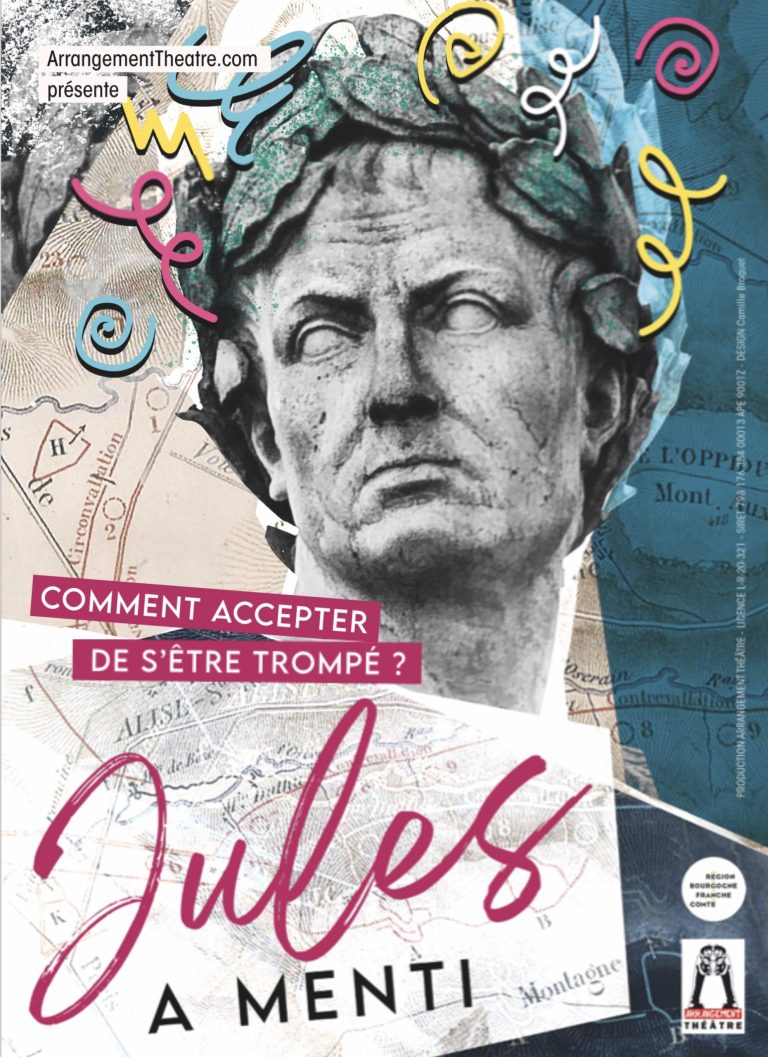
Jules lied
How do you accept being wrong?
Text and design Valérie Durin
Collaboration artistique Félix Hugue
Création technique Jean-Marc Istria
Graphisme Camille Broquet
Production ARRANGEMENT THEATRE
With "Aide à la création" support from the Département de l'Yonne
Description
For 160 years, we've been getting it wrong! The cradle of our civilization, precisely where we all became Gallo-Romans, the location of the famous battle of Alesia is wrong!
"To err on the side of your cradle is to err on the side of yourself," repeats the speaker, who is in her fifties, passionate and convinced.
That's when a confident, funny and clueless young man comes along to challenge everything.
Based on the story of Julius Caesar, this absurdly comic creation pits two worlds against each other: the old owl and the young rooster, erudition versus intuition, maturity versus ardor, female authority versus male arrogance.
As our history continues to be hammered home by the dominant victors, the eternal question of truth resurfaces.
Will we modestly accept that we were wrong?
Author's note
Based on serious, referenced specialist works, from Caesar to Goscinny, Voltaire to Hugo, and extending to more recent documents, I propose an amusing plunge into history at a time when the two regions of Burgundy-Franche-Comté are merging.
So in 2016, in co-production with Théâtre d'Auxerre, we created Alesia or the villains of Burgundy. The piece was also performed at the Avignon Festival the same year, and will be presented in Paris.
Today, I'd like to continue this work by taking up the text and adding an essential update: the intergenerational dimension.
It's a duel. Sometimes comic, sometimes absurd. It all depends on your point of view. How can you understand each other when you're sure you're right? Who will change course to join the other? How do you accept being wrong?
The play explores the themes of youth, trust, lies and conviction. Based on a true story - the controversy over the location of the cradle of our civilization - this play pits two worlds against each other - that of erudition and that of intuition, maturity versus youth. Who's right?
At a time when our contemporary censors are rewriting history, what support can we count on? What historical truth are we talking about?
Each performance will be followed by a discussion with the audience after the show.
Note of intent and direction
This "all-terrain" show is intended in particular for the following venues accessible to the disabled.
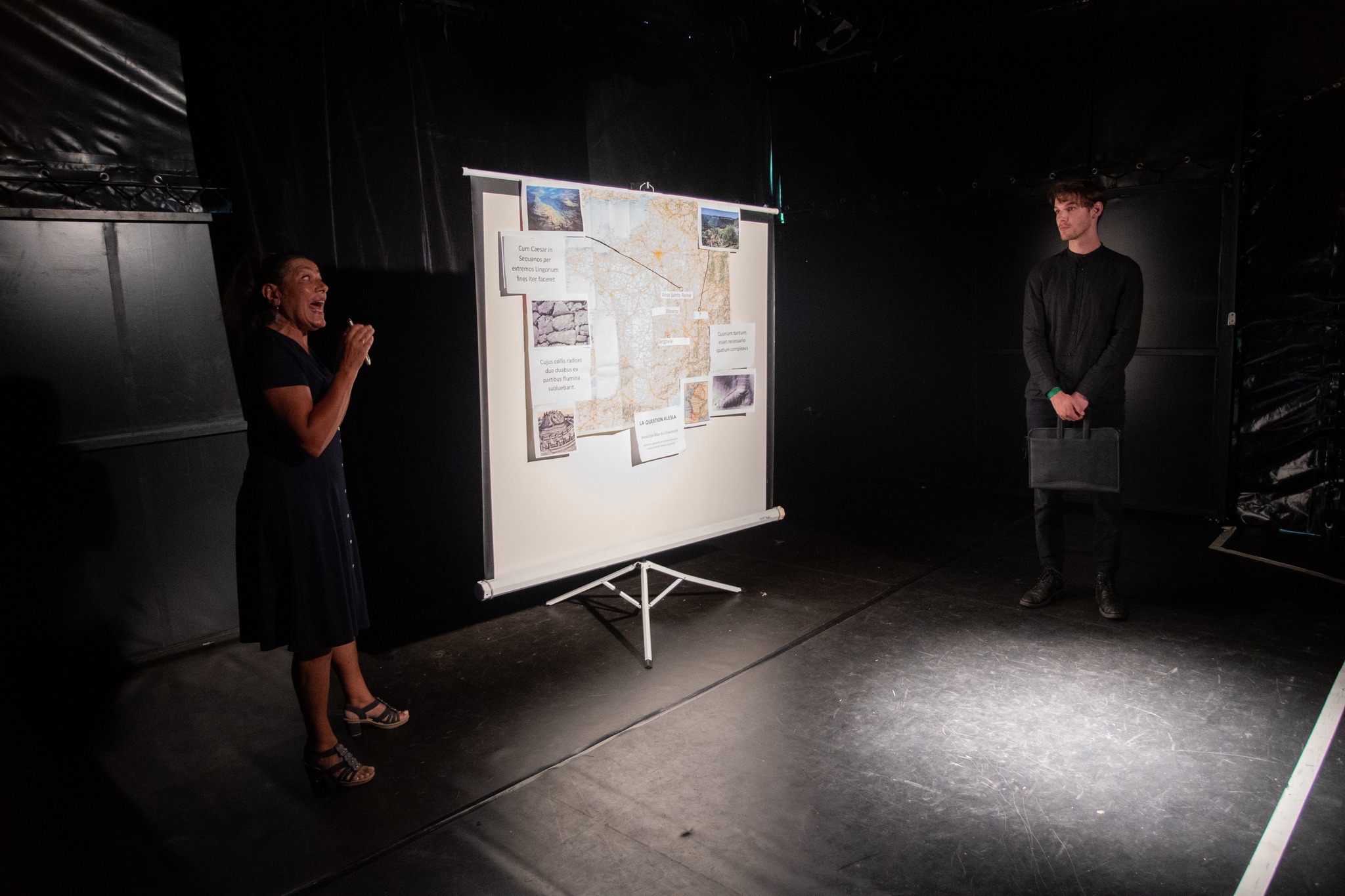
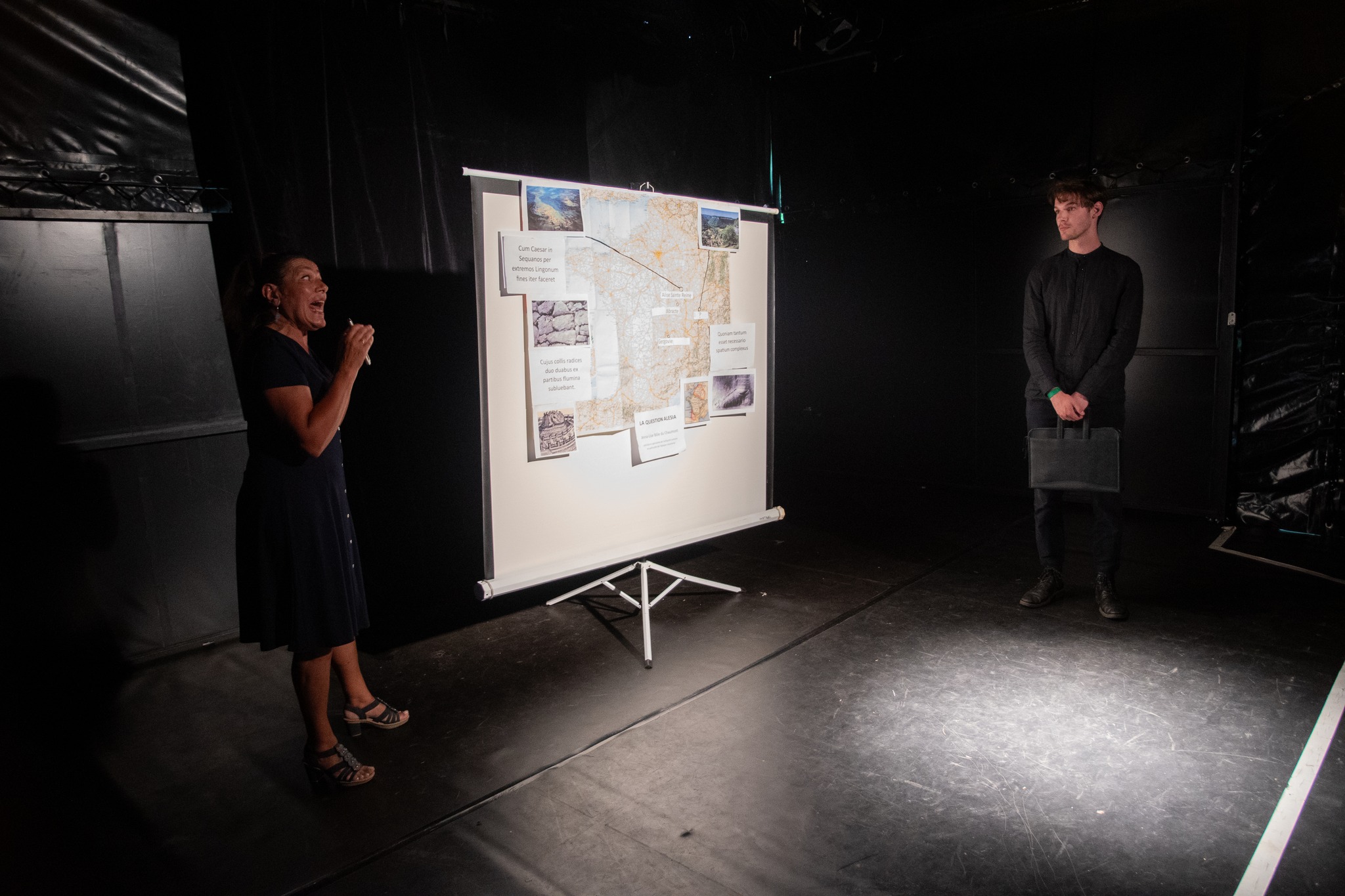
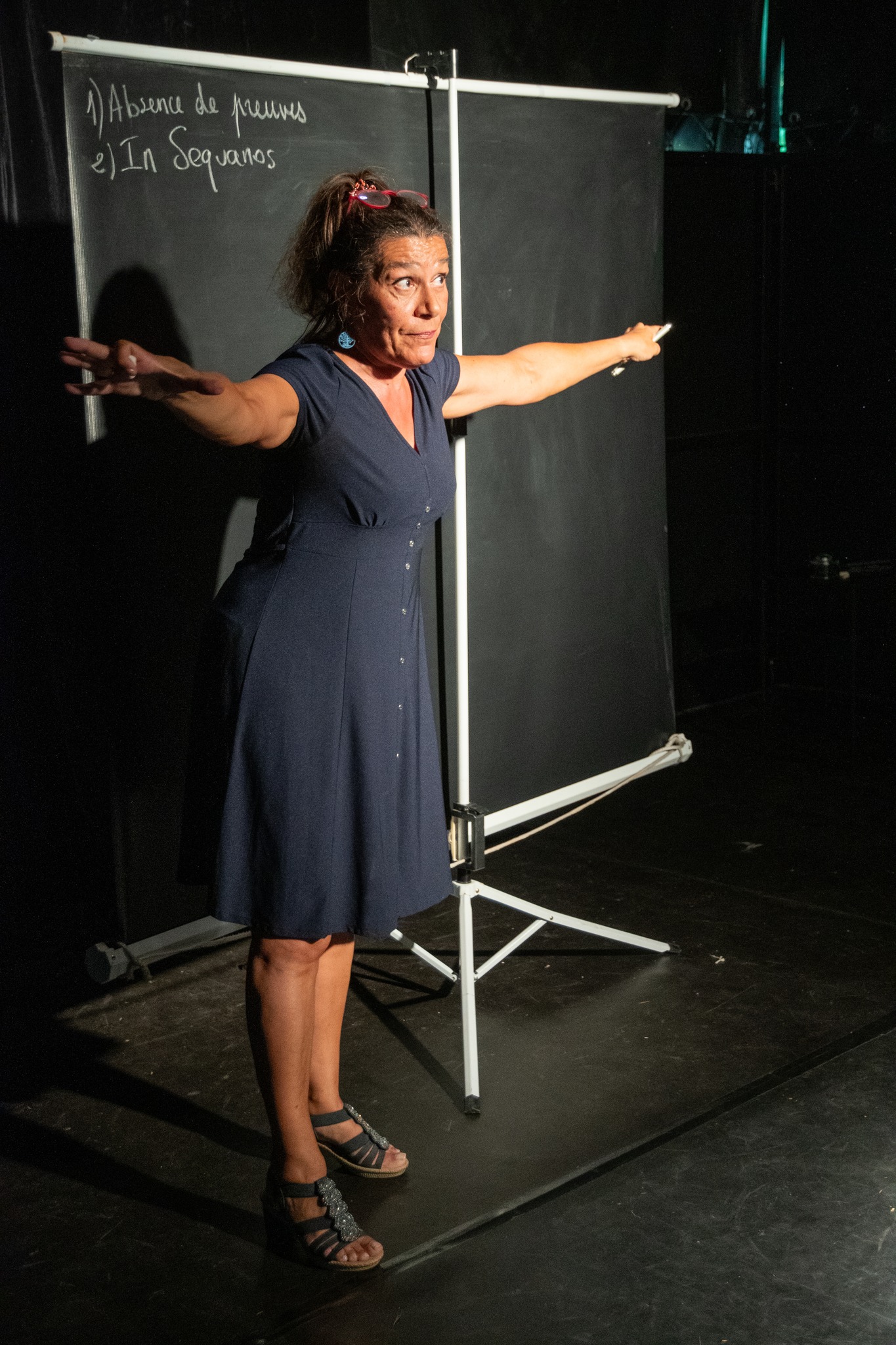
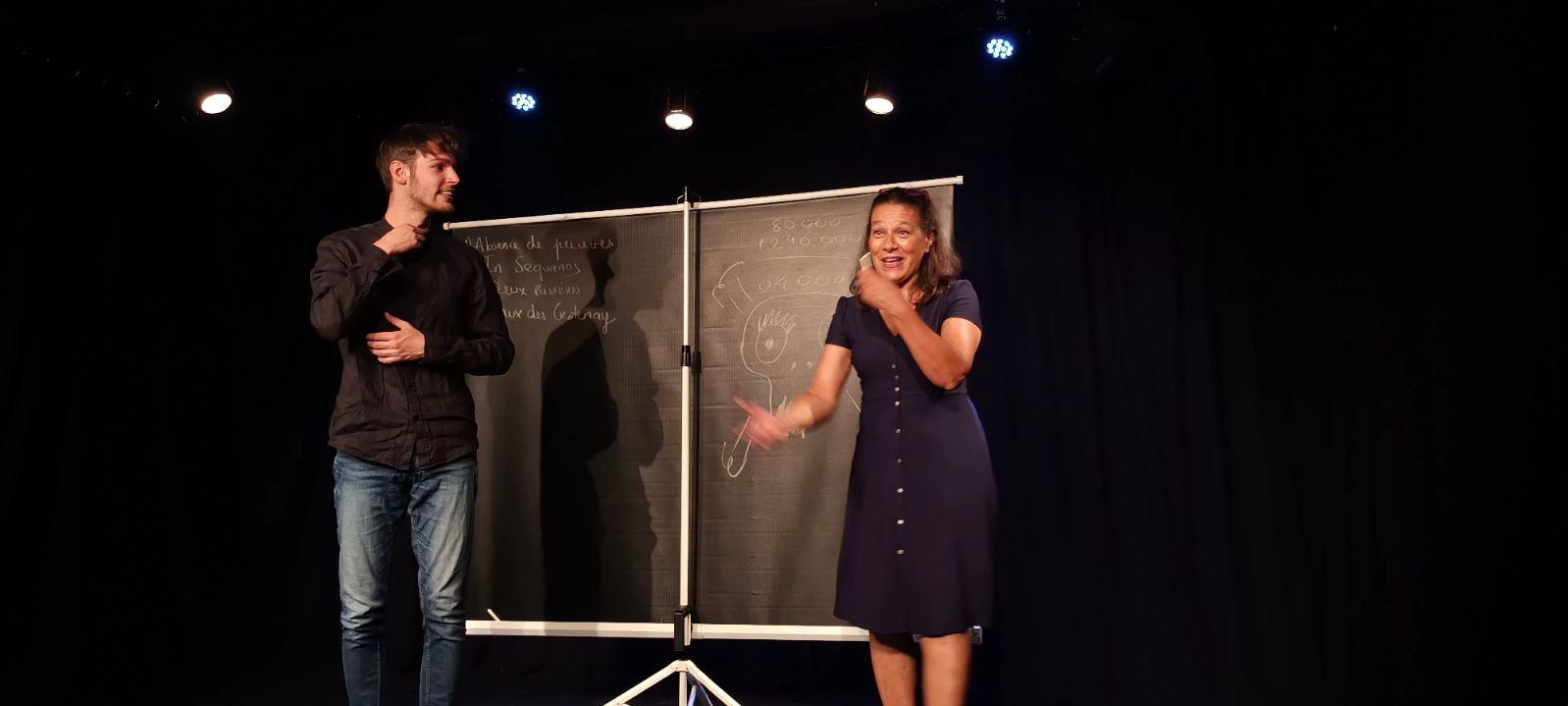
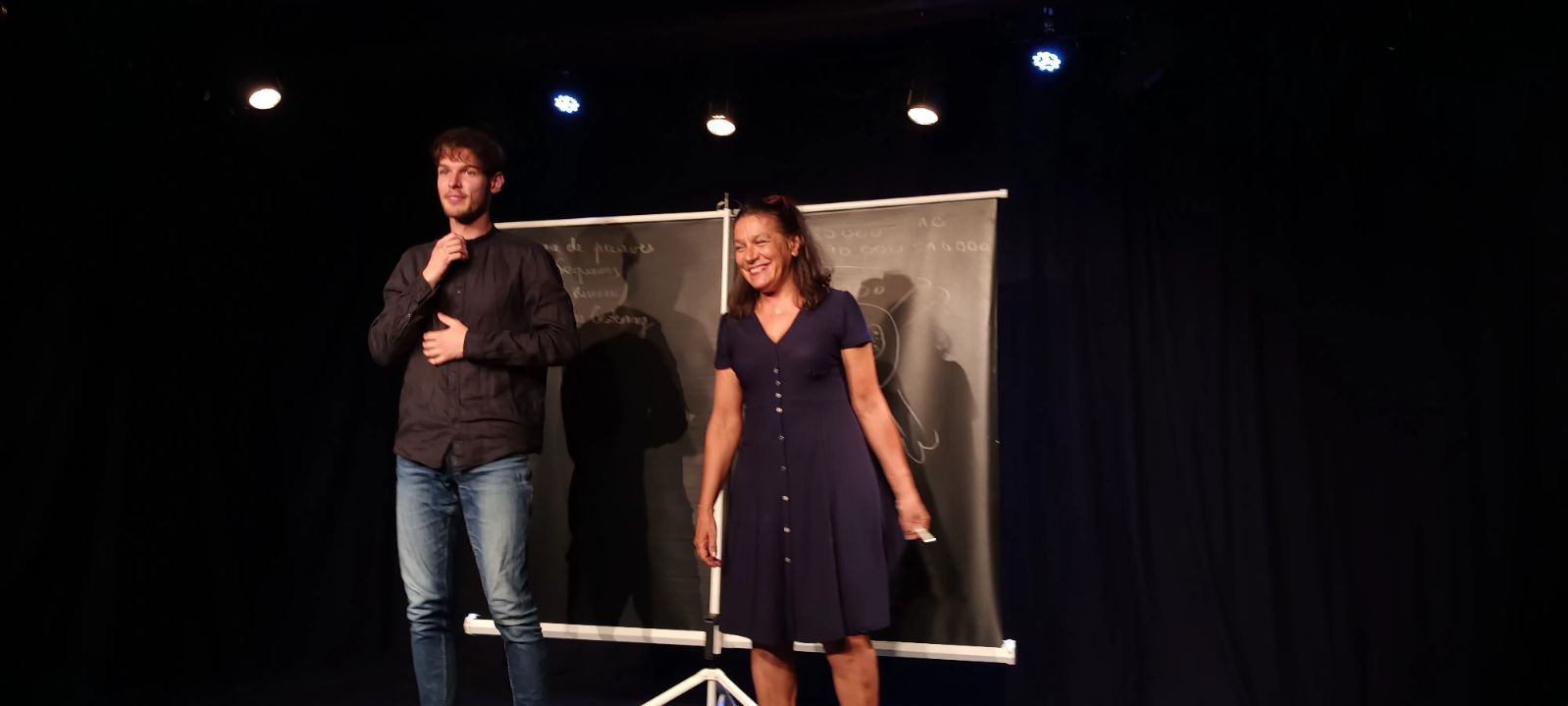
Its scenography is light. A projection screen on a stand sometimes cartography, sometimes blackboard, is the only set. The technical equipment, a video projector and LED lights, is used to find axes, supports videos and visuals.
The sound system, created by Jean-Marc IstriaIt adds an essential dimension to the show's various effects.
At the beginning ofhe representationthe public is taken to task as in a conference featuring question-and-answer sessions. The speaker (Valérie Durin), omnipresent on the set, plays head-on with the audience's reactions.
In the room is a young man (Félix Hugue) who reacts with increasing clarity to the speaker's assertions. Eventually, he too occupies the stage and turns the tables.
Lhe show moves into a new dimension, with the two actors entering into a kind of virulent duel.
Audience participation will again be solicited at the end of the show.
Objectives
Make our knowledge and our shared history accessible to all, in a fun way, so that we can share our thoughts and debates. Enable inhibited people to develop their oral skills, their thoughts and their opinions. Through play, words come out spontaneously, with a desire to understand and have fun.
Public
Everyone, especially middle and high school students.
Educational file available on request.
 English
  French
  Spanish
  German
  Italian